
But this rash, as terrible as it was, was nothing compared to what I had felt when I was at my most ill. The difference was that none of these symptoms could be seen. The illness was severe but invisible. And that invisibility made all the difference — it made me invisible, which itself almost killed me.
Meghan O’Rourke, The Invisible Kingdom, pg. 188
Four years ago today, my fellow Agriculture Leadership, Education, and Communication classmates and I arrived in Rwanda on the ALEC Food, People, Change Study Abroad and Research Trip. It was an amazing experience where two of the top ten most influential days of my life happened. On the second to last day, we were in Gisenyi on the eastern side of the country where the gorillas are. We were poor college students, so we couldn’t afford to see the gorillas but could do a day hike up Mt. Bisoke. I don’t know what our advisors were thinking about taking nine college students from Nebraska up a 13,000+ foot mountain in temperate rainforest, but you only live once. The pictures of the lake, the views from the top, and the trees all looked absolutely amazing, so we were excited to go. However, the conditions ended up being absolutely horrendous. We had drudged through the mud, and dense forest, and got poured on for almost five hours. Only six of us out of our group made it all the way up to the top because we were very unprepared.
When we got there, the wind was blowing over 4o mph, it was 35 degrees, and the fog was so thick we couldn’t see the crater lake or down off the. mountain. We couldn’t even see the boundary line for where the Democratic Republic of Congo started, so hopefully, we didn’t illegally enter the DRC…
Anyways, it felt amazing to get to the top! We were wet, cold, and tired, so we got our pictures and headed back down which ended up being miserable slipping and sliding all the way down, but when we got to the bottom, the rain and fog started to clear, and we could finally see how far we had come. WE HAD CONQUERED A MOUNTAIN IN TERRIBLE CONDITIONS.
We saw trees that were over 1,000 years old, monkeys, and earthworms the size of snakes, laughed, cried, made an amazing memory, and we conquered it together. It was a truly amazing day looking back. This was a very visible, tangible obstacle that we faced and overcame, but unfortunately, some of the toughest mountains to climb in our lives are often invisible to others.
Mental illness and many chronic illnesses are often invisible to the naked eye. You can look like you are living your best life, which gets even easier with social media highlight reels, but in reality, you are being torn apart from the inside out. I never knew how much your mental, physical, and emotional wellness were connected until it all came crashing down for me.
It all started in 2014 when I was a freshman in high school, and I got mono. Little did I know that was going to change everything for me. Thankfully, there have been months and years when I have been relatively healthy due to the latent nature of the Epstein-Barr Virus and how it stays in the B-cells hiding from the immune system. However, it can later reactivate. Over the last nine years, I have had several reactivations that have sent my physical and mental health into a tailspin.

There are times that you wouldn’t even know that I was dealing with chronic pain, chronic fatigue, depression, migraines, sinus issues, and ADHD, like when I hiked Mt. Bisoke or squatted 260 pounds. Other times, it is blatantly clear such as in 2019 and 2022. I hit some all-time lows with my physical and mental health. I lost titles, opportunities, and relationships that I held too close to my identity. I struggled mentally because my physical body was turning on me. I was convinced that my illness was a moral defect and that I was worthless because I wasn’t healthy. Read more about 2019 in this blog post: https://missmaes104.com/2020/01/06/peace-in-2020/ I could barely get out of bed, food was often an afterthought at the end of the day, and don’t even get me started on showering. It took too many spoons.
Spoons? Yes, this analogy was created by Christine Miserandio to describe the physical and mental energy tasks taken when you are struggling with chronic mental or physical illnesses. Most healthy people have unlimited opportunities and don’t have to think about the extreme mental and physical energy that most basic tasks can take. We often start the day with fewer ‘spoons’ and each task takes spoons away. We have to plan where we are going to spend our energy, and you aren’t always guaranteed to start tomorrow with the same spoons as today. And borrowing spoons from tomorrow is how you have a chronic illness flare up, get burnt out, or hit your mental breaking point. It can be very stressful trying to figure out where you can give spoons or if you will even have enough, but stressing takes away even more spoons. I would highly recommend reading the full story here: https://butyoudontlooksick.com/articles/written-by-christine/the-spoon-theory/
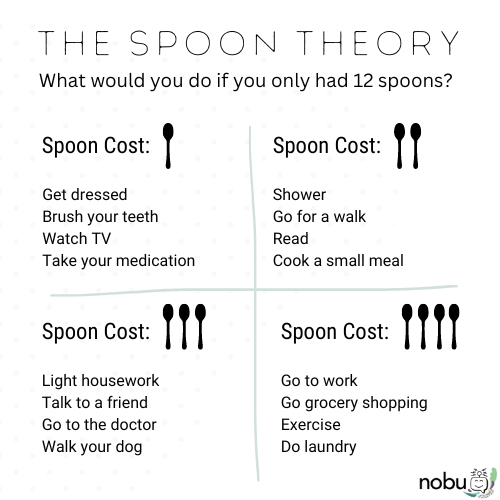
Everything took so many spoons, and I kept borrowing from the next day. I was so incredibly angry at God. I questioned whether or not I was supposed to be alive. I didn’t want to die, but sometimes suicide seemed like the only option to make the pain and suffering end. How was I supposed to live out my purpose on this planet when I couldn’t even get out of bed?
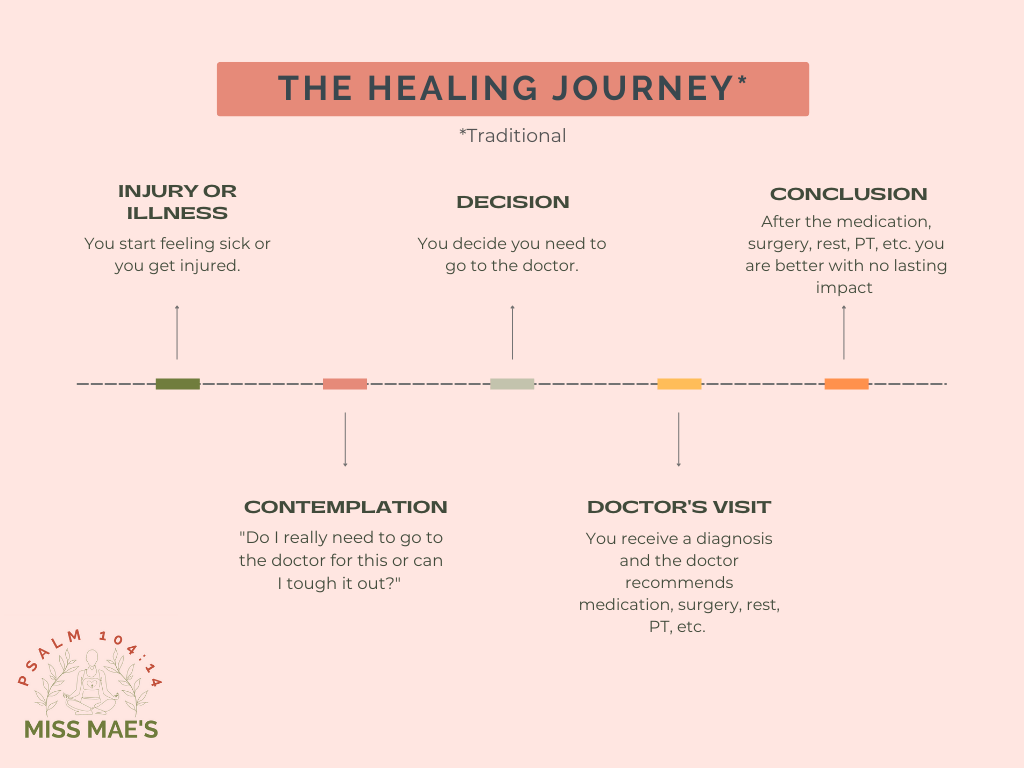
Every doctor I went to, all the tests, all the imaging, and things would barely be off. Yes, you could see my increased heart rate, low blood pressure, swollen joints, and occasional low blood test numbers, but it wasn’t enough to get a formal diagnosis. The only formal diagnosis that they would give me was depression and chronic fatigue. I was told it was all mental when I knew that wasn’t true. I mean, I knew I was struggling with mental health concerns, but there was definitely something physically wrong too. I was convinced that I had to have a doctor tell me what was wrong, but on average, those with an autoimmune disorder usually take on average around 7 years to get diagnosed.
“Why does a diagnosis matter so much to you?” a friend asked me at one point. I know many people who are suspicious of diagnoses — they think of them as labels that reduce or stigmatize. I knew, already, that a diagnosis was not going to answer all my questions. But I craved a diagnosis because it is a form of understanding.
Meghan O’Rourke, The Invisible Kingdom, pg. 54
Medical research has lagged behind when it comes to research on biological women. For so long, men were the only ones being included in medical studies and prescription trials. Women were not required by law to be a part of clinical research studies until 1993. This has caused dangerous beliefs in the medical community.
Women have longer wait times in the hospital when presenting to the ER with heart attack symptoms, they are less likely to receive opioid painkillers and are more likely to be diagnosed with a mental health disorder than a man presenting with the same physical symptoms. Unfortunately, women are more likely to have autoimmune disorders which tend to affect women during periods of extensive stress, pregnancy, and other large hormonal changes.
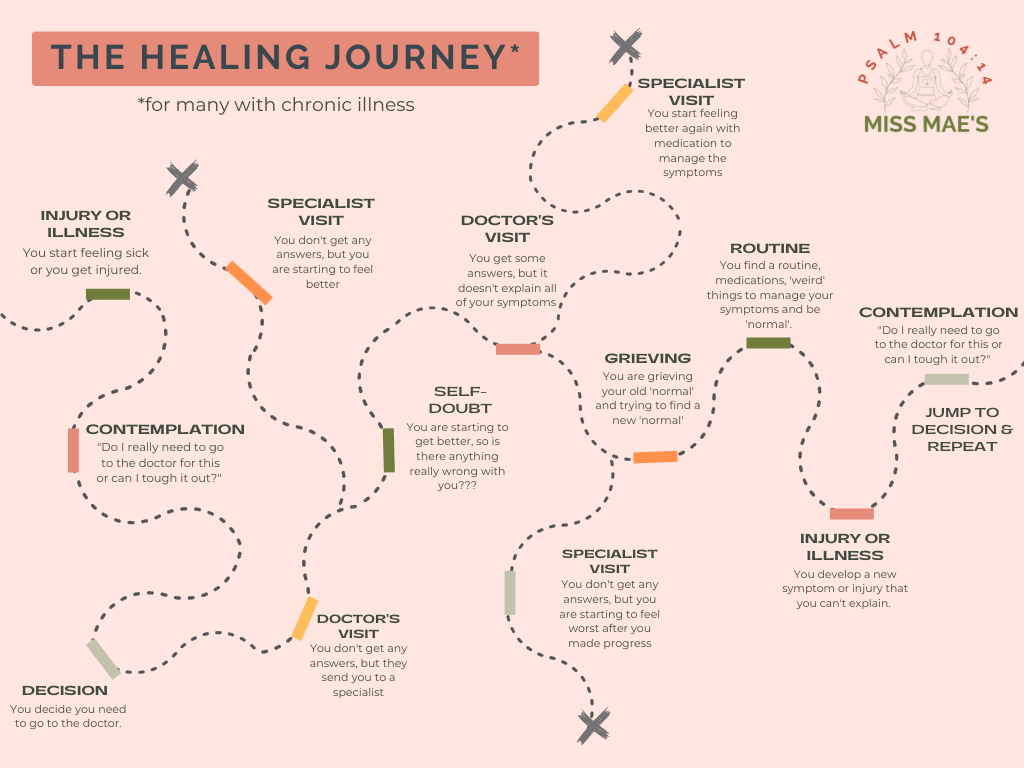
Studies have shown that women with chronic pain could be perceived as hysterical, emotional, complaining, not wanting to get better, malingerers, and fabricating pain as if it were all in their heads. I have heard all of these things from medical professionals except the first one. Now, I will give it to them that there is a powerful connection between emotions and chronic pain as I have been working to find emotional triggers for some of my pain as well as the environment which we will discuss more in depth in a later blog post.
The tendency in many parts of medicine is, if we can’t measure it, it doesn’t exist, or the patient is cuckoo
Meghan O’Rourke, The Invisible Kingdom, pg.
Medical professionals doubted me, and unfortunately, one study showed that 17% of women have felt that they have been treated differently because of their gender. Unfortunately, it is even more prevalent for women of color and other marginalized identities to feel that they are being treated differently. This can continue to impact mental health in a negative way.
Around 1 in 5 women have experienced a mental health condition in the last year according to the Office on Women’s Health. Women are also two times more likely to experience depression in their lifetime than men. They are also more likely to attempt suicide than men. Men, however, use more lethal means leading to more suicide completions for men. Women are more likely than men to develop an eating disorder. There can also be significant changes in women’s mental health during their menstrual cycle and postpartum. I will do a whole blog post on ADHD, but women are diagnosed two times less than men. This can be due to the fact that women’s mental health symptoms can present very differently than men’s. Unfortunately, it doesn’t end after menopause, two-thirds of people in the United States with dementia and Alzheimer’s are women.
There is much work that needs to be done in our country for both men, women, and gender non-conforming people when it comes to mental health, but when both women’s physical and mental health is taken seriously by medical professionals, it can improve health outcomes.
When I felt off, it was my fault, a sign of some internal weakness, a lack of moral fiber, a crack running through the integrity of my being.
Meghan O’Rourke, The Invisible Kingdom, pg. 24
I am still fighting every day. I take medication for my depression, ADHD, and migraines. There are days when I cannot get out of bed because of my chronic pain, and on those days my mental health is at its worst. I often wish I didn’t have to think so much and work so hard to stay physically and mentally healthy. However, I want you to know that there is hope. Having a chronic physical or mental illness is not a character flaw. Going to therapy, taking medication, and thinking of yourself first when it comes to your health is not a character flaw. It is empowering, and it can bring you healing.
I am so grateful that I have had such supportive friends, family, and co-workers to help me figure out ways to help me stay healthy. I am still working on letting go of wanting a formal autoimmune disease diagnosis and remembering it’s not about the diagnosis but finding the treatments, self-care, and resources that work to manage my uncertain symptoms. Heck, I found out I am allergic to pumpkin on Tuesday at 24 years old, but that’s a story for next week.
When you are dealing with chronic illness or mental health concerns, what works for someone else, may not work for you and that is okay. Take your time. Healing and well-being journies aren’t linear. Find a support system through friends, family, work, or a good dog who will snuggle you all day when you don’t have any spoons for the day.
It’s been a long road. I still get angry at God sometimes, but I know that He is working. I cannot understand the plan, but I know that he is going to use my story for his glory. From the song Hold On by Jervis Campbell, one of my favorite Christian artists,
So tell me how to make it through together, Cause I know that this hurt can’t last forever, And I know all of your love can make me better, Hold on and don’t let go, I know it’s been a long road. I know you feel alone. But just hold on. You can hold on.
Jervis Campbell, Hold On
When we climbed the mountain in Rwanda, some of us wanted to turn around when we were so close to the top, but we were all encouraging each other, leaning on each other (literally), and holding onto our hiking sticks for dear life. We weren’t alone, and that’s what helped us get to the top when we couldn’t actually see how close we were after such a long road. You may feel alone, invisible, like you want to give up, but hold on, you are not alone people understand what you are going through, you are so incredibly loved, and you are going to make it. And let me tell you, it’ll be the best meal of your life when you conquer that mountain.
Resources:
National Institute for Mental Health
Substance Abuse and Mental Health Services Administration
Mental Health First Aid Training & Resources
References:
The Invisible Kingdom by Megan O’Rourke
Women’s Office on Women’s Health: https://www.womenshealth.gov/mental-health
Medical Gaslighting of Women: https://www.nytimes.com/2022/03/28/well/live/gaslighting-doctors-patients-health.html
A Lifetime of Women’s Mental Health: https://www.mcleanhospital.org/essential/understanding-mental-health-over-womans-lifetime
Survey Monkey & Today Survey of Women’s Perceptions of Healthcare: https://www.today.com/health/today-survey-finds-gender-discrimination-doctor-s-office-serious-issue-t153641
Study of women and pain medicine in ERs: https://pubmed.ncbi.nlm.nih.gov/18439195/
Study of Latina women’s health disparities: https://www.tandfonline.com/doi/full/10.1080/19371910903240605
Study on stressors leading to higher health risks in black women: https://citeseerx.ist.psu.edu/document?repid=rep1&type=pdf&doi=bd31f7ed9a661b6a452f42c77cb6196ae9f136e3
 104 Collective